Some individuals use pig and hog without considering the difference between the two terms. The two are alike and are both species Sus scrofa domesticus; however, they differ in appearance, application, and residence. Differences are known to assist the farmers, animal lovers and other people who deal with livestock. This artilce will examine 7 key differences between pigs and hogs.
1. Age and Size
Pigs and hogs are differentiated by a difference in age and size. Pigs are also smaller and younger, in most cases, under one year old. They are said to be the young version of the tamed animal. Hogs are full grown and are mature, most of them are above one year and they are very heavy compared to pigs.
The weight of a normal market pig ranges between 50 and 150lb, and the weight hogs may be between 200 to 400lb and above depending on the breed. This variation in size does not only affect their weight, but also their body shape. The build of hogs is well developed and muscular with fatter legs whereas those of pigs are smaller and more fragile. This difference is highly important to a farmer since it dictates the amount of food a farmer would require, amount of space required and amount that he or she would be able to get a good price.
2. Physical Appearance
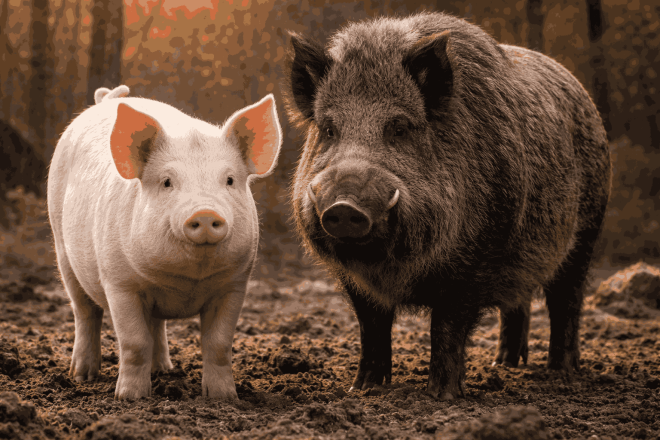
Pigs and hogs may appear similar but they differ in some ways. Pigs possess a smoother skin, lack body fat and short legs. They are smaller in size and their characteristics are less evident. Hogs possess rougher skin, more hairy skin and stronger body structure.
The size of snout and head is also another minor difference. The length of the snout in hogs is that one prefers to dig as it assists them to find food, whereas pigs have a shorter snout that fits their smaller bodies. They are also different in their ears: hogs tend to have bigger and floppy ears and pigs have smaller and perkier ears. The differences in looks ensure that the farmers and breeders can easily identify young pigs and adult hogs.
3. Purpose and Use
There are various reasons as to why people rear pigs and hogs. The primary reason why pigs are raised is quick meat due to the fact they are small and grow very fast. They suit markets that require tender and young pork.
The hogs are also kept to be used as meat and they are kept to breed. They are larger in size and fully grown making them suitable in having kids or supplying meat in the long run. A portion of the hogs are sold as special pork products such as bacon, ham, and other high-quality meat which require older well-fed animals. This variation in intent alters the way farms attend to all aspects, including feeding, housing as well as health of animals.
4. Feeding Habits
Though pigs and hogs share similar diets, their feeding habits differ due to age and metabolism. Pigs, being younger and smaller, require high-energy, nutrient-rich feed that promotes rapid growth. They are often fed commercial pig feed, grains, vegetables, and even milk-based supplements to accelerate weight gain.
Hogs, on the other hand, are more mature and can digest a broader range of foods, including forage, leftover crops, and coarser feed. They are less picky than pigs and can survive on a diet that would not suffice for younger animals. Their feeding habits also impact the texture and taste of the meat, with older hogs producing slightly firmer, more flavorful pork compared to the tender meat from pigs.
5. Behavior and Temperament
Pigs and hogs also exhibit significant differences in terms of behavior. The pigs are more active and inquisitive and they will tend to roam and play with other pigs. Their youthful vigor renders them more simple to educate and keep in little confinements.
Hogs are mature and tend to revert into being calm yet stubborn. They indulge in less playful activities and might prefer playing around places they know. Such a temperamental variation may influence the manner in which the farmers treat the animals particularly in transporting them between pens or providing them with medical attention or taking them to market.
6. Reproduction and Lifespan
The primary differences between pigs and hogs are their rate of reproduction and lifespan. Pigs are capable of having babies in a very short time typically in 5 to 8 months and hence breeding fast. Since they are young and small they are capable of having a lot of babies within a short period of time.
Hogs take a long time before they can be prepared to give birth. They may not breed before they are grown up, normally after one year. Hogs live longer too. The life of market pigs is normally a month less than a year, whereas the life span of hogs may be many years, particularly when maintained to breed. The awareness of such differences can enable the farmers to establish effective breeding strategies and properly to feed their stock in the future.
7. Terminology and Regional Usage
Last but not least, the terms applied to pigs and hogs will vary according to the region. In the United States, a big, adult pig is often referred to as a hog; a pig refers to a smaller younger animal. In certain other countries, individuals may call the same animal using the two words, which may be confusing.
Also, one should remember that a correct word is important in farm reports as well as in trading livestock. Referring to a pig as a hog or a hog as a pig may vary prices, the regulations on farming, and even the treatment of the animals by the vets. Having the right word is more than a word, it is also important in the life of any person who deals with pig farming or meat-making.
Conclusion
Pigs and hogs are the same animal although they differ in many ways such as their age, sizes, appearance, purpose of use, their diet, behavior, the way they spawn as well as the names given to them. Pigs are immature, small and energetic, and hence they are suitable in the production of fast meat. Hogs are mature, larger and tougher and thus are good in producing babies and in the long-term meat production. It is important to know these differences in order to assist the farmers, hobbyists, and anyone dealing with livestock. A correct identification and management of each type will result in healthy animals, increased productivity and increased profitability of swine businesses.