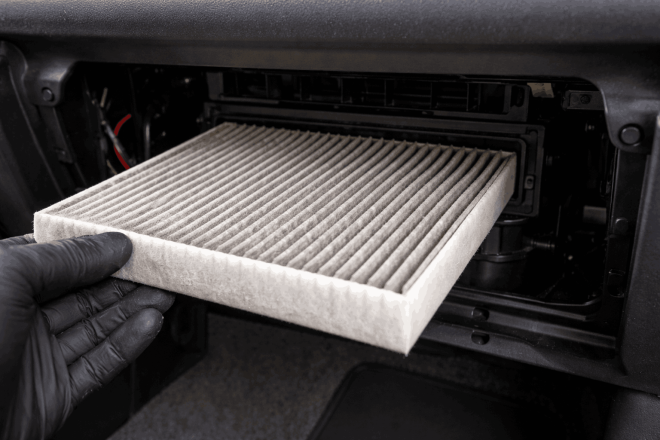
Your cabin air filter maintains the air in your vehicle. It prevents dust, pollen, soot and others into the cabin. An HVAC (heating, ventilation, and air conditioning) system can work well with a clean filter. A filthy filter may slow the airflow, create unpleasant odors, and put pressure on your HVAC system. Timely change has the following benefits of enhancing air quality as well as minimizing allergies and protecting the car components.
This guide informs you on the frequency of replacement of your cabin air filter, checking and indicators that your cabin air filter requires replacement.
What a Cabin Air Filter Does
A cabin air filter sits between outside air and your car’s ventilation system. It traps:
- Dust and dirt
- Pollen and allergens
- Mold spores and soot
- Bugs and debris
This makes the air that you breathe in your car clean and healthier. It also assists your HVAC system to operate fully. Failure to maintain this can result in weakening of your ventilation. Stinky fumes in your car can be increased. Motor blower is able to work harder and thus can decrease its life and require repair.
Standard Replacement Interval
Primarily manufacturers of vehicles advise changing a cab air filter after every 15,000-30,000 miles. Once per year is also used by many drivers. Annual replacement is safe in case you are not racking up miles so fast.
This is a common range of mileage since it sacrifices performance and price. It shows normal driving in urban, highway and light rural environments. Check your owner manual in case it contains a special schedule of your model.
Factors That Change How Often You Should Replace It
Your filter life depends on real world conditions, not just your odometer. These factors matter:
- Dusty Roads: More dust means faster clogging. Replace sooner.
- Heavy Traffic and Pollution: Urban smog and fumes load your filter with particles quickly.
- High Pollen Seasons: Spring allergies and pollen storms make the filter work harder.
- Allergy Concerns: If you or passengers have allergies, change more often.
In tough conditions, consider changing cabin filters every 10,000 to 15,000 miles or every 6 to 9 months.
Signs Your Cabin Air Filter Needs Replacement Now
You don’t have to wait for mileage. Check these real-world clues:
- Weak airflow from vents, even on high fan setting.
- Bad smells or musty odors when the HVAC runs.
- Dust inside the car or particles blowing from vents.
- Fogged windows that take longer to clear.
If you notice any of these, check the filter sooner than your schedule. A visual inspection can tell you if the filter is clogged or dirty.
How to Inspect and Replace the Filter
Most cabin air filters are easy to access.
- Find the filter location. It is often behind the glove box or under a panel near the windshield.
- Open the housing and pull out the old filter.
- Compare the old filter to a new one. If it looks grey or loaded with debris, it is time to replace.
- Install the new filter, making sure it fits the right way.
Some vehicles have more than one cabin filter or filters hidden in less obvious places, so check your owner’s manual first. If you feel unsure, a professional mechanic can inspect and replace the filter for you.
Benefits of Regular Replacement
You gain real performance and comfort by staying on top of this task:
- Better air quality inside the car.
- Stronger airflow from the vents.
- Less strain on your HVAC system.
- Fewer bad smells inside your car.
- Fewer allergy triggers on long drives.
Skipping cabin filter changes might save money short term, but dirty filters make HVAC components wear faster and can cost more later.
Choosing the Right Replacement Filter
Different cabin filters exist:
- Standard filters keep out dust and particles.
- Activated carbon filters also reduce odors and fumes.
- HEPA filters block very fine particles and allergens.
If you drive in cities, dusty areas, or have allergy concerns, a carbon or HEPA filter can be worth it. Always pick a size and fit that matches your car model.
Practical Tips to Protect Your Filter
Use recirculate mode on your HVAC in heavy traffic to reduce the load on your filter.
- Clean your car interior often so less dust enters the vents.
- Check the filter visually during routine maintenance, like oil changes.
- Consistent care extends filter life and keeps your car comfortable.

Final Thoughts
Changing your cabin air filter should be done every 15000-30000 miles or at least once in a year so that the air remains clean and no dust or contamination is accumulated. The environment, such as dusty roads, heavy traffic and even clean air could cause your filter to be clogged sooner and you may need to replace it more often to ensure your comfort and airflow. When you observe lack of strong vent airflow, unpleasant smell, and dust blowing in the vehicle, then it is time to change the filter. Regulatory change enhances the quality of air and makes your HVAC system effective. Last but not the least, select an appropriate filter type to suit your environment and priorities, whether it is a standard, activated carbon or HEPA.
NEXT POST: How Often to Change an Engine Air Filter